
Context
I joined Trafi in 2016 as its first product manager, taking over the public transport app teams. Over the following years I built the product function from the first PM to 6–7 PMs plus a researcher, managed design for part of my tenure and represented product at board level.
Trafi began as a consumer transport app. I helped lead its shift into a city platform, with launches in Vilnius, Berlin (Jelbi), Munich (MVG) and for SBB in Switzerland. City platforms became Trafi's core business, and the company was acquired by Enghouse in 2025. The challenge was meeting each city's needs without losing a coherent, traveller-first experience.
The foundation: teams built around the traveller's journey
While we were still B2C, I organised teams around the stages of a trip: trip planning, the ride experience, account setup and payments, and tools for service operators. Platform and rollout teams supported delivery, alongside dedicated teams for transport data and routing.
Each team owned a traveller problem rather than a backlog of requests. We aligned on three priorities: frequent daily journeys, less friction when taking a ride, and trust through reliable information and service. Our core metrics were retention, conversion to a ride and multimodal usage.
Key decision: adapt locally, protect the overall experience
When we started selling to cities, we assigned rollout teams to each city launch while keeping product teams focused on the overall traveller experience. Rollout teams adapted the product to each city's nuances; product teams protected a coherent experience across the platform.
I took part in scoping sessions with cities and helped turn their commitments into launch priorities centred on the traveller. That meant pushing for specific decisions, such as prioritising the transport modes that made the app more useful in everyday journeys. Holding that bar created tension with cities at times, as their timelines and priorities differed from ours. But it was also what kept the product strong.
Deep dive: the habits that kept improving the experience
After launch, three practices kept pushing the experience forward:
- User research. Behavioural analytics, interviews with retained and churned users and a survey of 180 churned users showed us what to fix and what to build next.
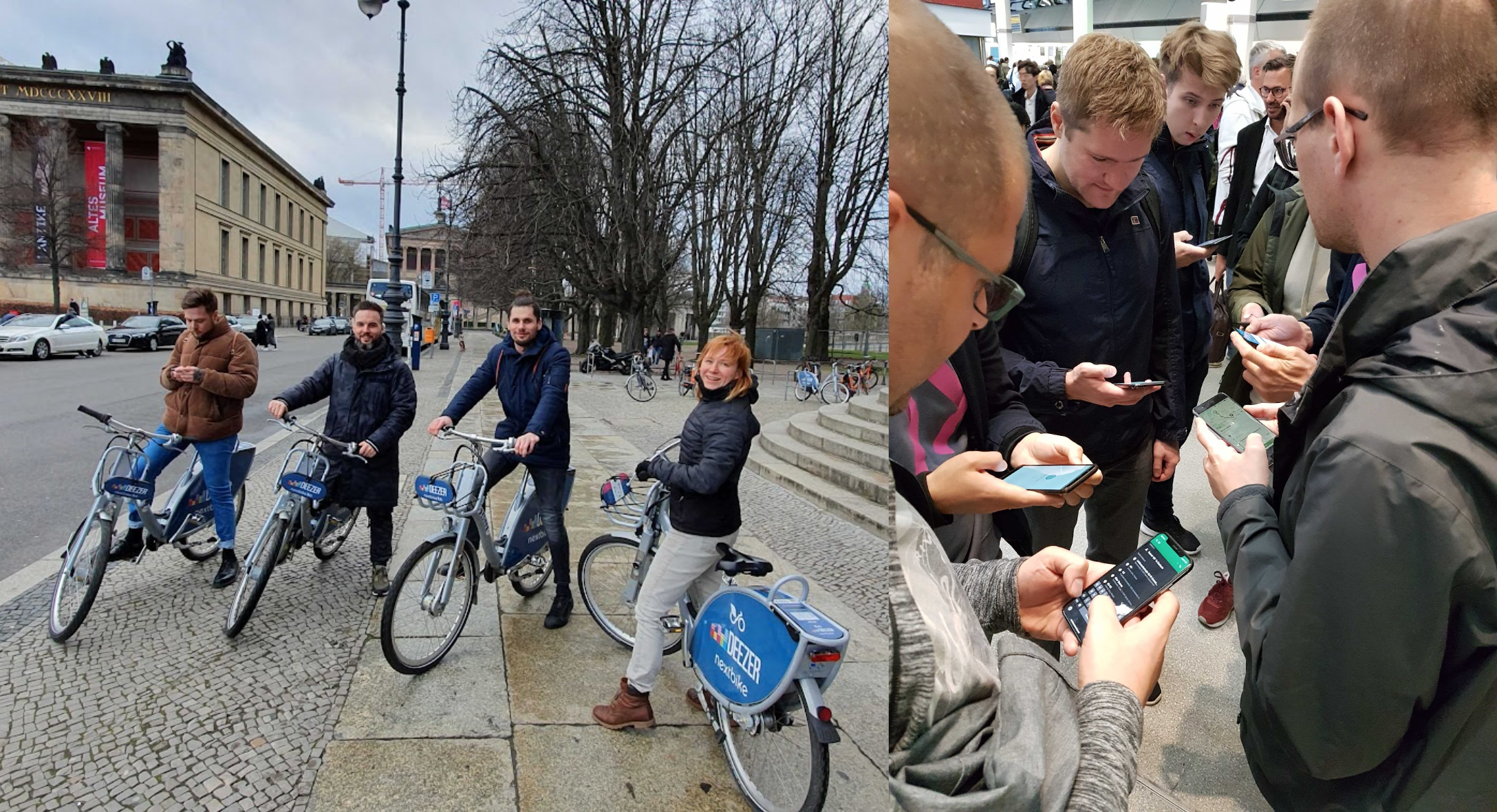
- Dogfooding in Berlin. Teams travelled to the city and used the app on real journeys, catching bugs that QA missed and building first-hand intuition for what travellers needed.
- Hands-on client management. We worked closely with the city on scope and pushed for the decisions that mattered most to travellers.
The research also set a clear direction:
- Comparison is the core value. Users valued seeing nearby options side by side, so every new mode made the app more useful.
- We were competing with habits. Many people still opened Google Maps or their usual transport app first.
Results
Between mid-2020 and mid-2021:
- Facilitated ride revenue across our city apps ~2× in a year, reaching a record high
- Revenue per active user almost 2×, as people rode more often
- 7-day conversion to a ride more than doubled from its low
- Launched city platforms in Vilnius, Berlin (Jelbi), Munich (MVG) and for SBB in Switzerland
- Built the product function from first PM to Product Director; city platforms became Trafi's core business, acquired by Enghouse in 2025
What I'd do differently
Align on outcomes with the buyer first. Cities worked on longer timelines and cared less about rapid consumer growth. I'd invest more time upfront in agreeing which traveller outcomes support the city's own goals, so quality becomes a shared target rather than a point of friction.
Act on insights faster. The research pointed to bigger wins. One was showing non-bookable providers in the app, with a deep link to their own apps, to make Jelbi the first place people check. I'd push to test ideas like this in one city sooner and let the data make the case.