
Context
During 2014–2016, I grew GMV per active user by introducing new categories. Vinted was also pushing to grow in the US and UK, where low AOV limited revenue per transaction and made the unit economics harder. A marketplace dominated by cheap items could put off buyers looking for higher-value clothing.
The business goal was to increase AOV. My job was to find product opportunities, prioritise them and test whether they could move the needle.
The idea
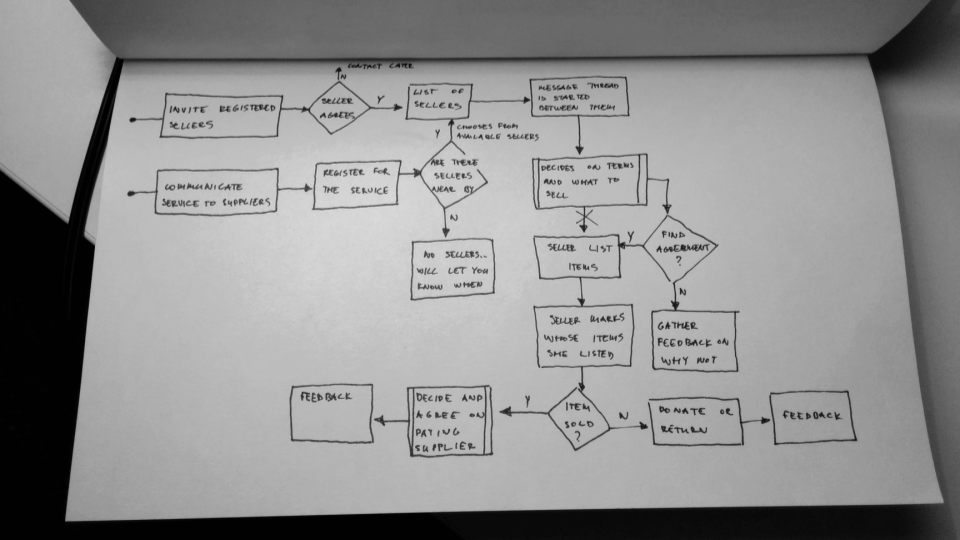
We saw a potential match between two groups. People with valuable clothes often lacked the time or motivation to sell them, while some experienced sellers wanted to run their own boutique. We called the idea the Stellar Seller service. Would those sellers sell other people's clothes for a share of the proceeds, and would owners hand them over?
Key decision: test in stages, build the minimum
A full build would need inventory forms, shipping and automated revenue splitting: months of work. Instead, I broke the idea into separate hypotheses and tested them in sequence: first, do sellers want this? Then, will owners use it?
At each step, we built only what we needed to observe real behaviour. Nearby matching and chat were enough to see whether people would connect and hand over clothes. The trade-off: a rough, manually coordinated experience, in exchange for clear answers in weeks rather than months.
Deep dive: the pilot
Step 1: seller demand. We started in the San Francisco area, where our US user base was densest. We invited ~2,300 top sellers to apply, with 600 applications as the go/no-go threshold. We got ~3,100, as sellers shared the opportunity with friends.
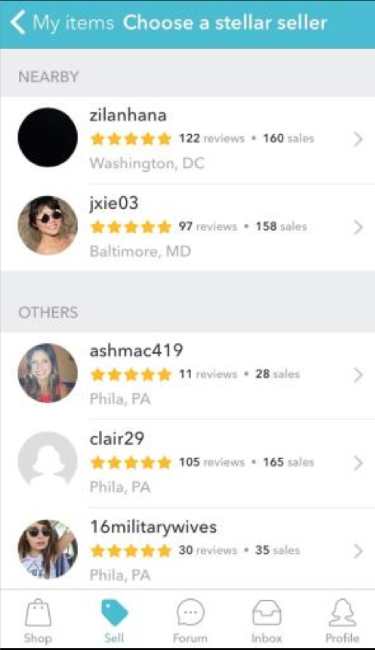
Step 2: owner demand. We added the offer to onboarding, let owners pick a nearby seller and opened a chat between them. I ran the pilot with local community managers and marketing, and coached sellers on how to open conversations. The live pilot ran for about three weeks.
What happened:
- 3–4% of users who saw the onboarding offer opted in
- 21% of those started a conversation
- A smaller share went further, and some did meet and hand over clothes
Reading the chats explained the drop-off. Many owners didn't have the kind of clothing we were after, or weren't motivated enough to sell. Seller demand was proven; suitable supply among the owners we reached was not. That left us with a precise next question, how to acquire the right owners and at what cost, before we had built a single expensive feature.
Results
- Seller demand validated: ~3,100 applications vs. a 600 target (5×)
- Identified the real bottleneck, supply of suitable clothing, in about two months
- No inventory, shipping or payment features built, so the insight came at a fraction of the cost of a full launch
- A clear, measurable next experiment for the business to decide on

What I'd do differently
I'd run the same staged approach again: it was cheap and decisive. But I'd plan the supply-side experiment from day one: acquiring the right clothing owners directly and measuring whether enough completed exchanges could justify the CAC. Securing marketing support for that step upfront would have let us close the loop.